Minimally Invasive Hemorrhoidal Surgery (Laser and Beyond)
Modern, Minimally Invasive Treatment for Piles with Less Pain and Faster Recovery
Hemorrhoids, commonly known as piles, are swollen blood vessels around the anus that can cause bleeding, pain, itching, swelling, or a lump during bowel movements. Hemorrhoidal cushion is present in every individual and serves as a continence mechanism. It becomes swollen and prolapses due to prolonged straining.
For many patients, lifestyle changes and medication can provide relief. However, when hemorrhoids become persistent, large, or troublesome, a procedure may be needed.
Modern minimally invasive technique that treats symptomatic hemorrhoids aims to reduce hemorrhoidal blood flow and shrink the swollen tissue while preserving the normal structures around the anus and continence mechanism.
What Are Hemorrhoids?
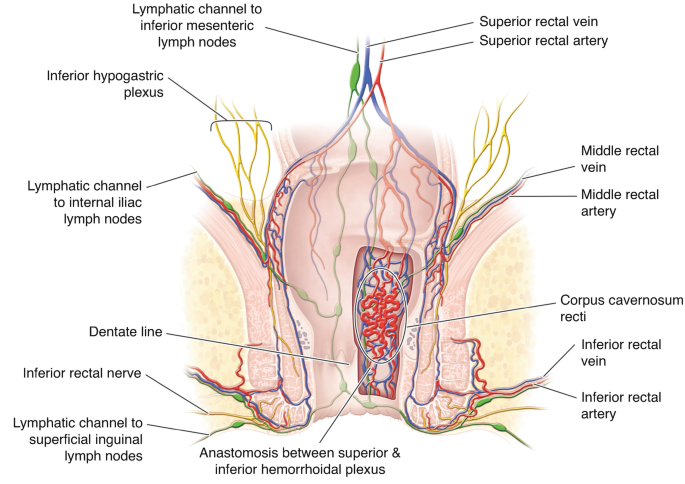
Hemorrhoids are normal cushions of blood vessels inside the anal canal that help maintain bowel control. Problems occur when these tissues become enlarged or displaced.
The Sliding Anal Theory explains that hemorrhoidal disease develops when prolonged straining causes disintegration of supporting tissues of anal cushion and hence venous engorgement and abnormal downward displacement of anal cushion.
Hemorrhoids are classically divided into two but only internal hemorrhoids are true enlargement and prolapse of arteriovenous plexus with the anal cushion. Where else, external hemorrhoids are engorgement of perianal venous plexus, commonly known as perianal hematoma.
Internal hemorrhoids (True Hemorrhoids)
Develop inside the anus and may cause:
- Bright red bleeding during bowel movements
- Tissue protruding from the anus
- Mucus discharge
- A feeling of incomplete emptying
External hemorrhoids (Perianal Hematoma)
Develop under the skin around the anus and may cause:
- Painful swelling
- A lump near the anus
- Discomfort when sitting
Why Consider Minimally Invasive Hemorrhoidal Surgery?
✓ Less tissue cutting compared with traditional surgery
✓ Reduced postoperative discomfort in many patients
✓ Minimal bleeding
✓ Shorter hospital stay
✓ Faster return to daily activities
✓ Preservation of normal anal anatomy
The suitability of treatment depends on the size, type, and severity of your hemorrhoids.
What are these Minimally Invasive Hemorrhoid Surgery?
Laser Hemorrhoid Surgery (LHP)– most commonly done
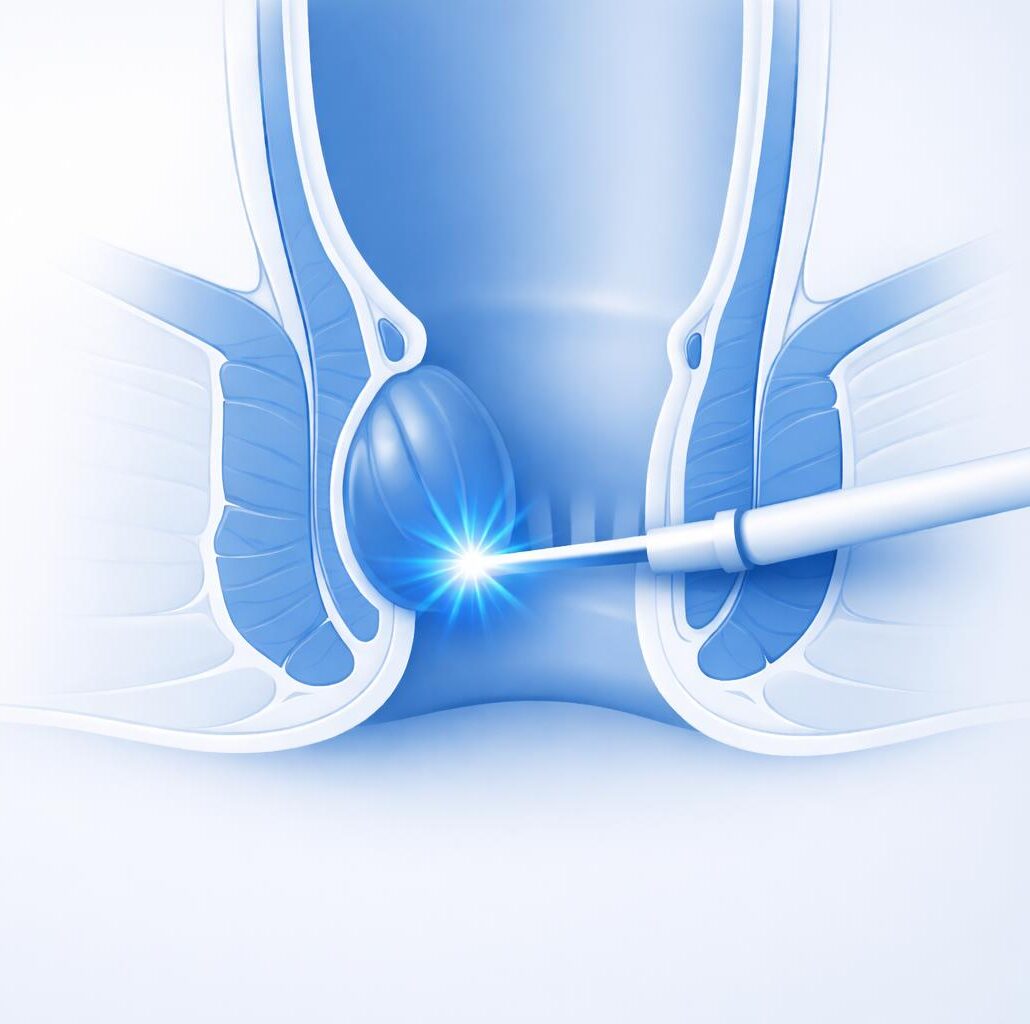
A minimally invasive technique in which laser energy is delivered into the hemorrhoidal tissue, causing it to shrink from within while preserving the surrounding anal tissue, resulting in less pain and faster recovery.
eXroid Treatment– latest and least invasive of all
A bipolar electrotherapy treatment that delivers controlled electrical energy to the hemorrhoidal tissue, sealing the feeding vessels and inducing gradual shrinkage. It is typically performed as an outpatient procedure with minimal discomfort.
Hemorrhoidal Artery Ligation (HAL)
A minimally invasive procedure that uses Doppler ultrasound to locate and tie off the arteries supplying the hemorrhoids, reducing blood flow and allowing the hemorrhoids to shrink with less postoperative pain
How Does Laser Hemorrhoidal Surgery Work?
The principle behind laser hemorrhoid treatment is controlled thermal energy delivery.
During the procedure:
- A small laser probe is inserted into the hemorrhoidal tissue.
- Laser energy is delivered precisely to the hemorrhoidal blood vessels.
- The treated tissue gradually shrinks and scars down.
- Blood flow feeding the hemorrhoids is reduced.
- Symptoms improve over time.
Unlike traditional hemorrhoidectomy, the procedure avoids extensive removal of anal skin and tissue.
Who May Benefit From Laser Hemorrhoidal Surgery?
Laser hemorrhoidal surgery may be suitable for patients with:
- Grade II hemorrhoids (prolapse that goes back in by itself)
- Selected Grade III and IV hemorrhoids (with hemorrhoidal artery ligation and recto-anal mucopexy)
- Recurrent bleeding hemorrhoids
- Multiple hemorrhoids causing persistent symptoms
- Patients looking for a less invasive surgical option
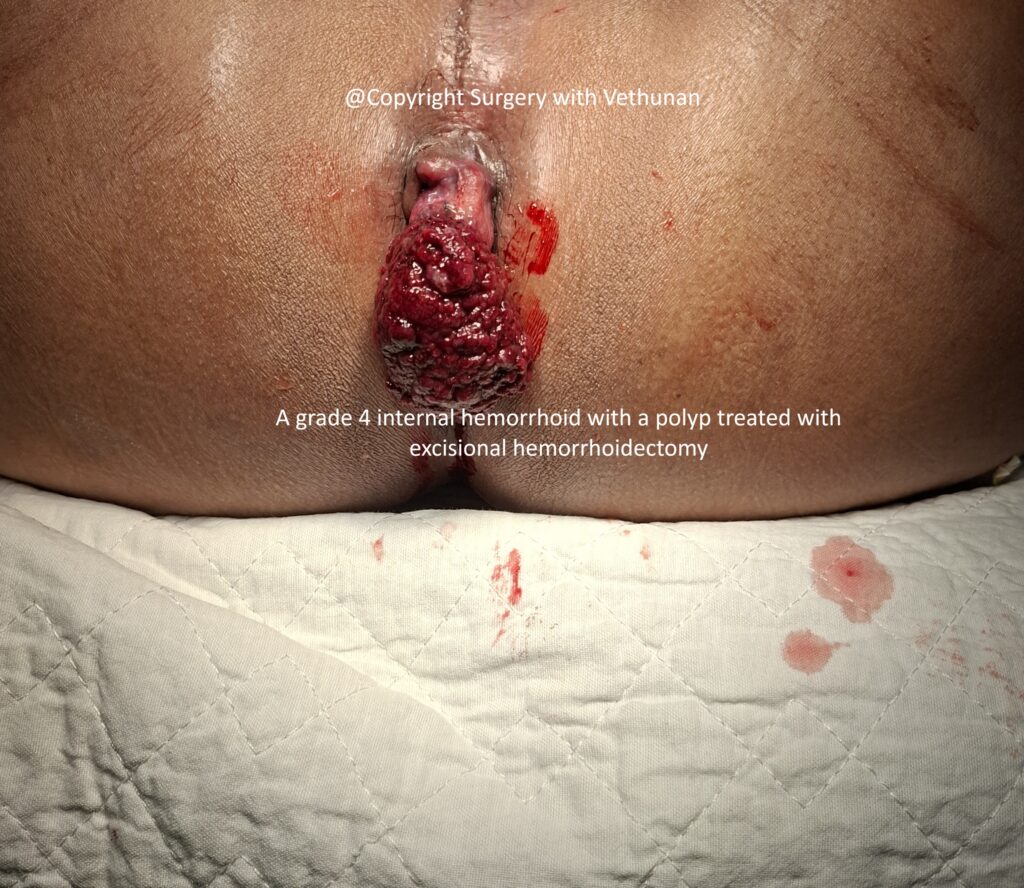
Patients with very large external components or advanced prolapse( like the picture below) may require other surgical approaches.
A detailed assessment is important to determine the most appropriate treatment.
Before the Procedure: How to Prepare?
Before laser hemorrhoidal surgery, I will:
- Review your symptoms and medical history
- Perform an anorectal examination
- Assess the severity of your hemorrhoids
- Discuss available treatment options
Depending on your age and symptoms, further investigations such as colonoscopy may be recommended, especially for patients with rectal bleeding, to exclude other causes.
Before surgery:
- Follow fasting instructions if required
- Inform your doctor about medications, especially blood thinners
- Arrange transport home if undergoing day surgery
What Happens During Laser Hemorrhoidal Surgery?
Laser hemorrhoidal surgery is usually performed as a day-care procedure.
During the procedure:
- Anaesthesia is administered for comfort.
- The surgeon identifies the hemorrhoidal cushions. (In selected cases hemorrhoidal artery detected and ligated)
- A laser fibre is carefully positioned inside the hemorrhoidal tissue.
- Laser energy is applied to shrink and seal the hemorrhoidal vessels.
- Recto-anal mucopexy is used to address residual prolapse hemorrhoidal tissue.
- The procedure usually takes around 20–45 minutes, depending on the number of hemorrhoids treated.
Most patients can return home on the same day.
Recovery After Laser Hemorrhoidal Surgery
Recovery is usually quicker compared with traditional hemorrhoid removal surgery. You may experience:
First few days:
- Mild discomfort
- A feeling of fullness around the anus
- Mild bleeding or discharge
- Increased urge to pass motion
Recovery advice:
Drink plenty of water
Maintain a high-fibre diet
Avoid straining during bowel movements
Use stool softeners if advised
Keep the anal area clean
Resume normal activities gradually
Most patients return to normal daily activities within a few days, although complete healing continues over several weeks.
Is Laser Hemorrhoidal Surgery Painful?
One of the main reasons patients choose laser treatment is the potential for reduced postoperative pain compared with conventional hemorrhoidectomy.
Because laser treatment causes less tissue disruption, many patients experience:
- Less wound discomfort
- Less difficulty passing stools
- Faster recovery
However, every patient experiences pain differently, and some discomfort is expected during healing.
Frequently Asked Questions (FAQ)
Is laser hemorrhoid surgery safe?
Yes. When performed by an experienced colorectal or general surgeon, laser hemorrhoidal surgery is considered a safe minimally invasive treatment option for suitable patients.
Will my hemorrhoids come back after laser surgery?
Laser treatment reduces hemorrhoidal tissue and blood flow, but recurrence is possible. Maintaining good bowel habits, avoiding constipation, and managing straining can reduce the risk.
How long does laser hemorrhoid surgery take?
The procedure usually takes approximately 20–45 minutes depending on the number and severity of hemorrhoids.
Can I go home on the same day?
Yes. Most patients are treated as day-care surgery patients and return home after recovery from anaesthesia.
When can I return to work?
Many patients return to light activities within several days. The timing depends on your occupation and recovery.
Take the Next Step Towards Comfortable Relief
Living with hemorrhoids can affect your confidence, comfort, and daily activities.
With modern minimally invasive techniques such as laser hemorrhoidal surgery, many patients can achieve symptom improvement with less discomfort and faster recovery.
A personalised assessment will help determine whether laser treatment is the right option for you.
