
Laparoscopic Bowel and Cancer Surgery
Minimally Invasive Surgery for Large and Small Intestine including Rectum.
Laparoscopic bowel surgery is a modern minimally invasive technique used to treat diseases of the intestine and rectum, including colorectal cancer, diverticular disease, and selected benign bowel conditions.
Using small keyhole incisions, a camera, and specialised instruments, the surgeon can perform complex bowel operations while minimizing trauma to the abdominal wall.
For many patients, laparoscopic surgery offers smaller scars, less pain, quicker recovery, and a shorter hospital stay compared with traditional open surgery.
What Conditions Can Be Treated?
Laparoscopic bowel surgery may be used for:
- Colon cancer (large intestine)
- Rectal cancer (selected cases)
- Large bowel polyps (not removable endoscopically)
- Diverticular disease (recurrent or complicated)
- Inflammatory bowel disease (selected patients)
- Bowel strictures (narrowed segments)
- Recurrent bowel obstruction (selected cases)
Symptoms That May Require Assessment
You should seek medical evaluation if you experience:
Persistent abdominal pain
Blood in the stool
Unexplained weight loss
Change in bowel habits
Persistent constipation or diarrhea
Bloating or abdominal swelling
Recurrent bowel obstruction
Iron deficiency anemia
Why Choose Laparoscopic Surgery?
- Smaller incisions
- Less postoperative pain
- Reduced blood loss
- Lower risk of wound infection
- Faster return of bowel function
- Shorter hospital stay in many patients
- Earlier return to normal activities
How Does Laparoscopic Bowel Surgery Work?
The operation is performed through several small incisions using a high-definition camera.
The abdomen is gently inflated
To create working space
A camera and working instruments(ports) are inserted
Through 5-6 small incision 5-10mm each
The diseased section of bowel is removed
Along with nearby lymph nodes if cancer is present
The technique varies based on underlying pathology and the segments which needs to be removed
The disease bowel will be then removed via a small incision at the groin
The healthy bowel ends are rejoined
This is called an anastomosis and is usually done with a surgical stapler
In some cases, a temporary or permanent stoma (bag) may be required, particularly for low rectal cancers.
Laparoscopic Surgery for Colon Cancer
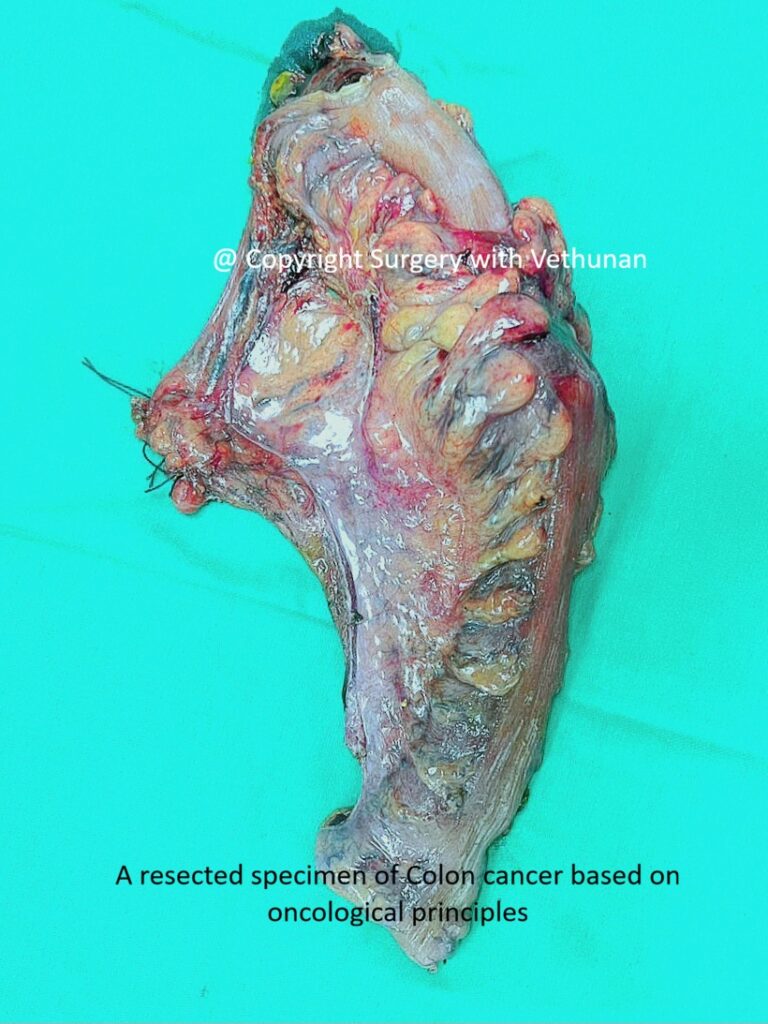
For colon cancer, the surgeon removes:
The segment of colon containing the tumor
Surrounding blood vessels
Regional lymph nodes for cancer staging
The removed tissue is sent for detailed pathological examination to determine the cancer stage and whether additional treatment is needed.
Laparoscopic Surgery for Rectal Cancer
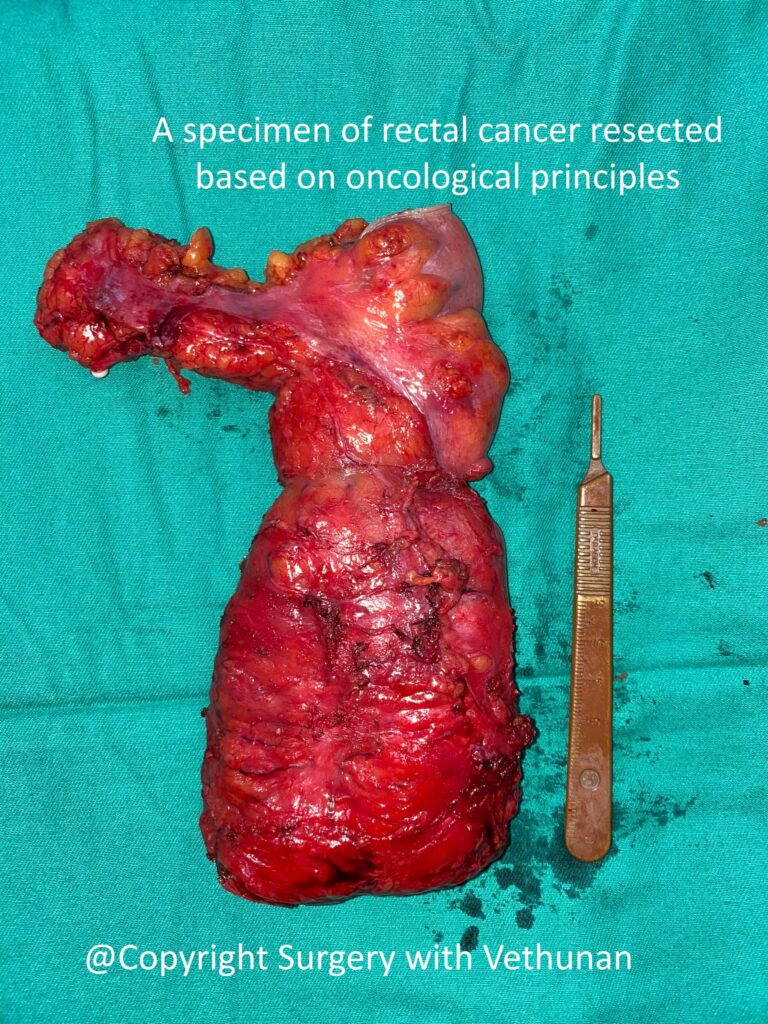
Rectal cancer surgery is often more technically demanding because the rectum lies deep within the pelvis.
For selected patients, laparoscopic techniques can be used while still following important cancer surgery principles, including complete tumor removal and adequate lymph node clearance.
Before Surgery: What Tests Are Needed?
Depending on your condition, investigations may include:
Colonoscopy
CT scan
MRI pelvis (for rectal cancer)
Blood tests
Cardiac assessment if required
Chest imaging
I will explain the findings and discuss the recommended treatment plan.
Preparing for Surgery
Before the operation, you may be asked to:
Follow a special diet
Take bowel preparation if required
Fast for several hours
Stop certain medications under medical advice
Arrange support at home after discharge
Recovery After Laparoscopic Bowel Surgery
First 1–2 days Expected
Walking with assistance
Drinking fluids
Starting light food as bowel function returns
During hospital stay Usually 3–7 days
Pain control
Early mobilization
Breathing exercises
Gradual return to normal eating
Most patients 2–4 weeks
Resume light daily activities
Return to office-based work
Gradually increase physical activity
Full recovery from major bowel surgery may take 4–8 weeks depending on the operation performed.
Is Laparoscopic Cancer Surgery Safe?
Yes. Numerous international studies have shown that, in appropriately selected patients and when performed by experienced surgeons, laparoscopic surgery can provide similar cancer control outcomes to open surgery.
The key factor is adherence to proper oncological principles, including adequate tumor removal and lymph node dissection.
Frequently Asked Questions (FAQ)
Will I have a large scar?
Usually no
Most laparoscopic operations use several small incisions, with one slightly larger incision to remove the bowel specimen.
Will I need a stoma bag?
Sometimes
Not all patients require a stoma. The need depends on the location of the disease, the type of operation, and safety considerations.
How long does the operation take?
2–5 hours
Depending on the complexity of the surgery.
When can I eat after surgery?
Early
Many patients begin fluids within a day and gradually progress to normal food as bowel function returns.
Can bowel cancer be cured?
Often
Many colorectal cancers are potentially curable, especially when detected at an early stage and treated appropriately.
Will I need chemotherapy after surgery?
Depends
This depends on the final pathology results, including the cancer stage and lymph node involvement.
Take the Next Step Towards Expert Bowel Care
If you have been diagnosed with a bowel condition or colorectal cancer, early assessment and appropriate treatment are important.
Laparoscopic bowel and cancer surgery offers a minimally invasive option that may help reduce recovery time while maintaining the principles of safe and effective cancer treatment.