
Minimally Invasive Anal Fistula Surgery
Modern Treatment for Persistent Anal Fistula

An anal fistula is an abnormal tunnel that forms between the inside of the anal canal and the skin around the anus. It commonly develops after an anal abscess and may cause repeated discharge, swelling, pain, or infection.
Anal fistula surgery aims to remove central disease and close the fistula tract while preserving normal bowel control as much as possible.
What Is an Anal Fistula?
A fistula is a small tunnel connecting:
The anal canal (inside) to the skin around the anus (outside)
It often occurs after an infected anal gland forms an abscess that drains but leaves a persistent tract behind. –The Crytoglandular Theory
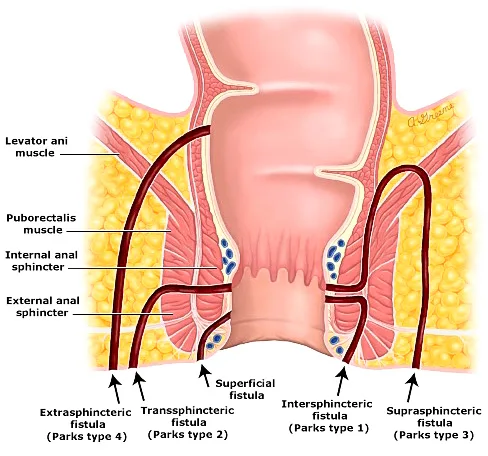
Common Symptoms
- Persistent or recurrent discharge
- Pus or staining of underwear
- Swelling near the anus
- Pain or tenderness
- Repeated abscess formation
- Bleeding or irritation
- A small opening on the skin near the anus
Why Is Surgery Often Needed?
Unlike a simple skin infection, an anal fistula usually does not heal permanently with antibiotics alone.
Surgery is often recommended because the fistula tract remains connected to the anal canal, allowing ongoing infection and recurrence.
The main goals of treatment are:
- Eliminate the infection
- Remove the fistula tract or at least remove the central disease ( the origin of disease at the intersphincteric space )
- Prevent recurrence
- Preserve bowel control (continence)
Types of Anal Fistula Surgery
1. Fistulotomy
The fistula tract is opened and allowed to heal from the inside out.
Best for: Simple, low fistulas
Advantages:
High healing rate
Single procedure in many cases
2. Fistulectomy with Sphincter Repair
The entire fistula tract is surgically removed.
Best for: Selected high and Mid Transphincteric fistulas
Advantages:
Complete tract removal
Allows detailed tissue examination
Preserves continence
3. Seton Placement
A soft thread or drain is placed through the fistula tract.
Best for: Complex or acute fistulas with abscess
Advantages:
Controls infection
Protects continence
May be used before definitive surgery
4. Ligation of Intersphincteric Tract (LIFT)
Best for high tran-sphincteric and supra-sphincteric fistulas where sphincter preservation is important
5. Laser Fistula Treatment/ FiLAC
Best when combined with other techniques ( like Intra-anal Fistulotomy and Closure of Opening) for complex fistulas.
Potential advantages:
Minimally invasive
Less tissue cutting
Faster recovery for selected patients
Sphincter-preserving approach
Not all fistulas are suitable for laser treatment.
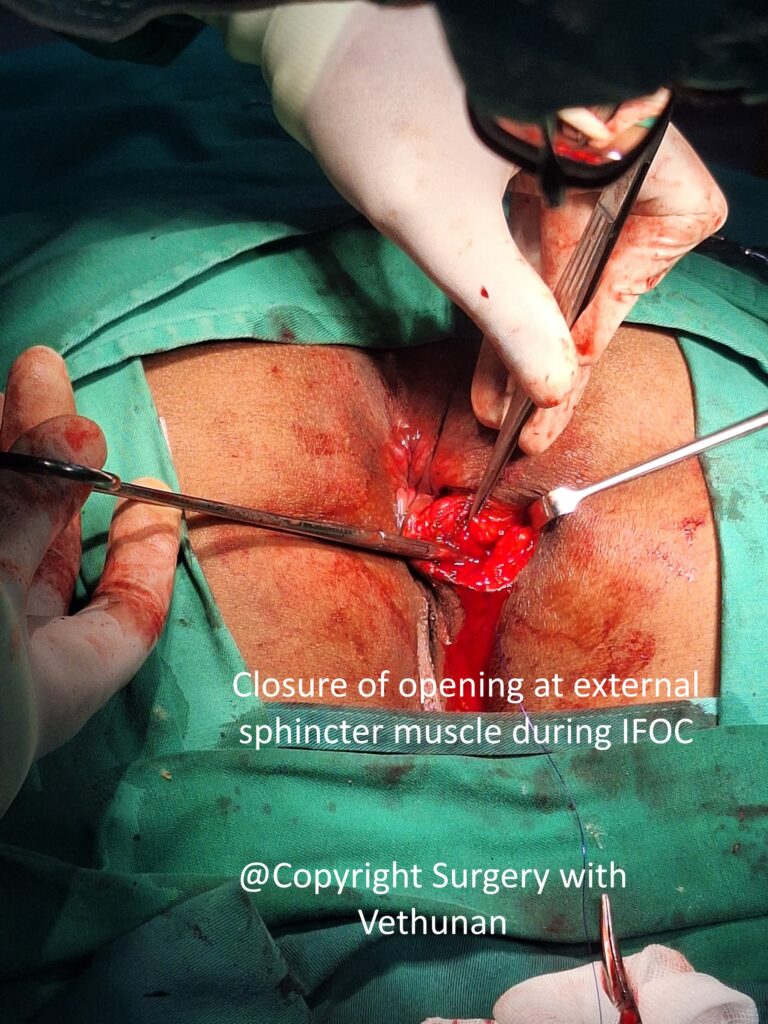
6. Intra- anal Fistulotomy and Fistula Opening Closure
How Is the Best Operation Chosen?
I will assess:
- Whether the fistula is simple or complex
- Its relationship to the sphincter muscles
- Previous abscesses or surgeries
- Presence of Crohn’s disease or other bowel disorders
- Risk of affecting continence
Investigations such as MRI fistula mapping may be recommended for complex cases.
Before Surgery
Before the procedure:
Examine the fistula
Review previous abscess episodes
Evacuate the bowel with an enema
Discuss the expected healing process
Explain the possibility of staged treatment for complex fistulas
What Happens During Surgery?
Anaesthesia is given
General or regional, depending on the procedure
The fistula tract is identified
Carefully mapped and probed before treatment
The chosen treatment is performed
Fistulotomy, seton, LIFT, IFOC or laser closure
The area is cleaned and dressed
Before recovery and discharge
Many procedures are performed as day surgery, although complex cases may require a longer stay.
Recovery After Anal Fistula Surgery
First few days (Expected)
Mild to moderate discomfort
Drainage from the wound
Minor bleeding or staining
Swelling around the anus
Helpful measures (Important)
Warm sitz baths
High-fibre diet
Drinking plenty of water
Stool softeners if prescribed
Keeping the area clean and dry
Healing time (Varies)
Simple fistulas: often heal within several weeks
Complex fistulas: may require months and occasionally more than one procedure
Will Surgery Affect Bowel Control?
Preserving continence is one of the most important considerations in fistula surgery.
Your surgeon will choose a procedure that balances:
- Fistula healing (High priority)
- Prevention of recurrence (High priority)
- Protection of sphincter muscles (Essential)
Frequently Asked Questions (FAQ)
Can an anal fistula heal on its own? Uncommon
This is uncommon. Most persistent fistulas require surgical treatment.
Is laser fistula surgery better? Depends
Laser treatment may offer advantages for selected patients, but the best procedure depends on the type and complexity of the fistula.
Will I need more than one operation? Sometimes
Simple fistulas often heal after one procedure. Complex fistulas may require staged treatment.
How painful is fistula surgery? Usually manageable
Some discomfort is expected, especially during the first few days, but it is usually manageable with medication and sitz baths.
Can the fistula come back? Possible
Yes. Recurrence can occur, particularly with complex fistulas. Careful follow-up helps detect problems early.
When can I return to work? A few days to 2 weeks
This depends on the procedure performed and the physical demands of your job.
Take the Next Step Towards Lasting Relief
Living with an anal fistula can be frustrating, uncomfortable, and disruptive to daily life.
With modern surgical techniques, including sphincter-preserving and minimally invasive options, many patients can achieve effective treatment while maintaining normal bowel control.