Native Arteriovenous (AV) Fistula Surgery and Laparoscopic Tenckhoff Catheter Creation: Understanding Your Dialysis Access Options
What Is a Native Arteriovenous (AV) Fistula?
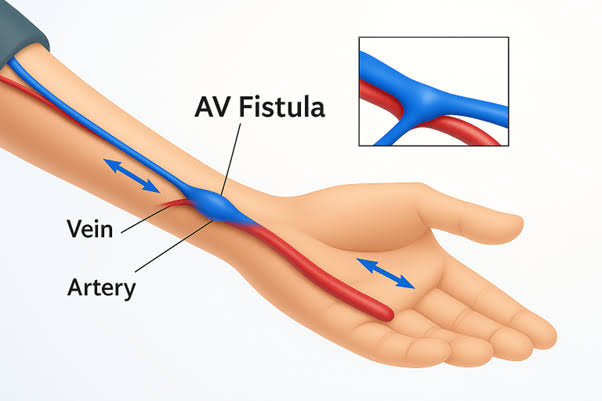
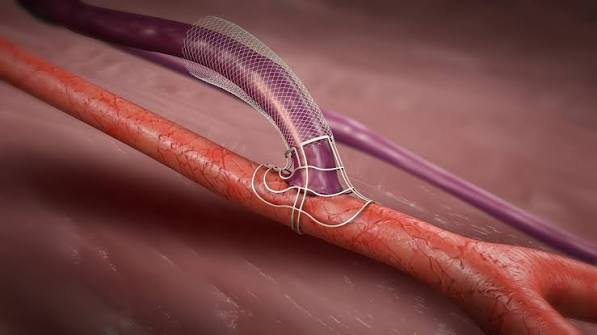
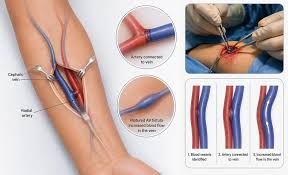
A native AV fistula is a surgically created connection between an artery and a vein, usually in the arm. By connecting these blood vessels, the vein enlarges and strengthens over time, allowing repeated needle access for haemodialysis.
AV fistulas are widely regarded as the preferred form of vascular access for long-term haemodialysis because they generally last longer and have fewer complications compared to other forms of access.
Common Sites for AV Fistula Creation
The location of an AV fistula depends on the quality of the patient’s blood vessels. Common sites include:
- Wrist (radiocephalic fistula)
- Forearm
- Upper arm (brachiocephalic fistula)
- Upper arm basilic vein transposition
Whenever possible, surgeons prefer to create the fistula in the non-dominant arm.
Who Needs AV Fistula Surgery?
AV fistula surgery is recommended for patients with:
- Advanced chronic kidney disease approaching dialysis
- End-stage kidney disease requiring long-term haemodialysis
- Existing dialysis access that has failed or become unsuitable
Ideally, fistula creation should be performed several months before dialysis is expected to begin, allowing sufficient time for the fistula to mature.
How Is AV Fistula Surgery Performed?
The procedure is usually performed under local, regional, or occasionally general anaesthesia.
During surgery:
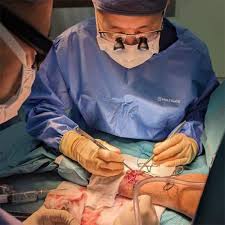
- A small incision is made over the selected blood vessels.
- The surgeon identifies a suitable artery and vein.
- The artery and vein are surgically joined together.
- Blood flow through the vein increases, causing it to enlarge over time.
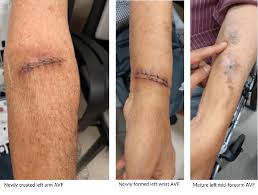
- The incision is closed with sutures.
Most procedures take between 1 and 2 hours.
Patients can usually return home on the same day or after a short hospital stay.
Recovery After AV Fistula Surgery
Following surgery, patients may experience mild discomfort, swelling, or bruising around the surgical site.
Important postoperative advice includes:
- Keep the wound clean and dry.
- Avoid heavy lifting for several weeks.
- Do not allow blood pressure measurements or blood taking from the fistula arm.
- Perform hand exercises if advised by the surgical team.
The fistula usually requires 6 to 12 weeks to mature before it can be used for haemodialysis.
Patients should regularly check for a vibration or “thrill” over the fistula, which indicates blood flow.
Potential Complications of AV Fistula Surgery
Although AV fistulas are generally safe, complications can occur.
Possible complications include:
| Complication | Description |
|---|---|
| Bleeding | Bleeding from the surgical site or during dialysis |
| Infection | Redness, swelling, pain, or discharge |
| Failure to mature | Fistula does not enlarge sufficiently for dialysis |
| Thrombosis | Formation of blood clots within the fistula |
| Steal syndrome | Reduced blood flow to the hand causing pain or coldness |
| Aneurysm formation | Localised enlargement of the fistula |
Prompt medical review is important if patients notice loss of thrill, increasing pain, or signs of infection.
What Is a Tenckhoff Catheter?
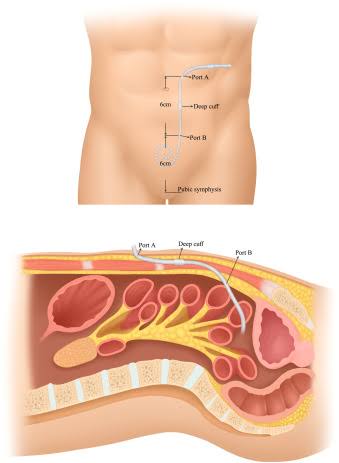
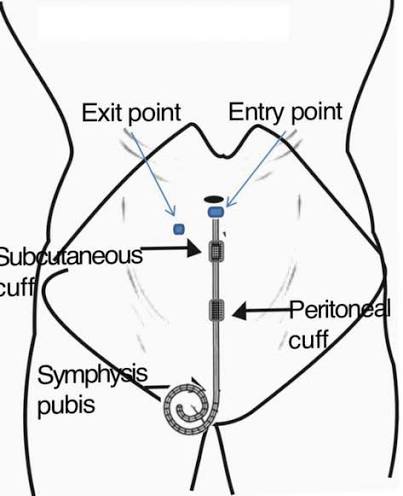
A Tenckhoff catheter is a soft silicone tube inserted into the abdomen to facilitate peritoneal dialysis. Peritoneal dialysis uses the lining of the abdomen (peritoneum) as a natural filter to remove waste products and excess fluid.
This form of dialysis allows treatment to be performed at home and provides greater independence for many patients.
Why Is Laparoscopic Tenckhoff Catheter Insertion Preferred?
Traditionally, Tenckhoff catheters could be inserted using an open surgical technique. However, laparoscopic insertion has become increasingly popular because it allows the surgeon to directly visualise the abdominal cavity.
Advantages of laparoscopic insertion include:
- Accurate catheter placement
- Reduced catheter malfunction
- Identification and treatment of intra-abdominal adhesions
- Lower risk of catheter migration
- Improved long-term catheter function
Who Is Suitable for a Laparoscopic Tenckhoff Catheter?
Patients suitable for peritoneal dialysis may benefit from laparoscopic catheter insertion.
This includes patients who:
- Prefer home-based dialysis
- Desire greater flexibility and independence
- Have suitable abdominal anatomy
- Require long-term dialysis access
Previous abdominal surgery does not always exclude patients from peritoneal dialysis, as laparoscopy allows adhesions to be assessed and managed.
How Is Laparoscopic Tenckhoff Catheter Creation Performed?
The procedure is performed under general anaesthesia.
During surgery:
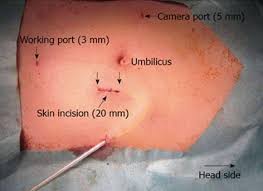
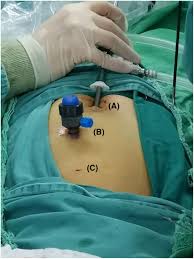
- Small incisions are made in the abdomen.
- Carbon dioxide gas is introduced to create working space.
- A laparoscope (camera) is inserted to visualise the abdominal cavity.
- Adhesions, if present, may be divided.
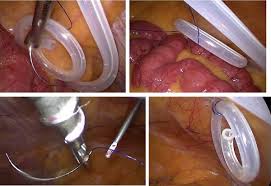
- The Tenckhoff catheter is accurately positioned within the pelvis.
- The catheter is tunnelled beneath the skin to reduce infection risk.
- The incisions are closed.
Most procedures take approximately 30 to 60 minutes.
Patients are often discharged on the same day or after an overnight stay.
Recovery and Care After Tenckhoff Catheter Insertion
Patients should:
- Keep the dressing dry and intact.
- Avoid heavy lifting for several weeks.
- Follow catheter care instructions carefully.
- Attend scheduled follow-up appointments.
Peritoneal dialysis usually begins after a healing period of approximately 2 weeks, although urgent-start protocols may occasionally be used.
Potential Complications of Tenckhoff Catheter Insertion
Complications may include:
- Catheter infection
- Exit-site infection
- Peritonitis
- Catheter blockage
- Catheter migration
- Fluid leakage around the catheter
- Bleeding
Early recognition and treatment of complications are essential to maintain catheter function.
Conclusion
Both native AV fistula surgery and laparoscopic Tenckhoff catheter insertion provide essential dialysis access for patients with advanced kidney disease. AV fistulas remain the gold standard for long-term haemodialysis, while Tenckhoff catheters offer patients the option of home-based peritoneal dialysis.
The choice between haemodialysis and peritoneal dialysis should be individualised after discussion with the nephrology and surgical teams, taking into account medical suitability, lifestyle preferences, and long-term treatment goals.