
Laparoscopic Hernia Repair (Keyhole Hernia Surgery)
Modern Minimally Invasive Treatment for Groin and Abdominal Wall Hernias
A hernia occurs when an internal tissue, usually fat or part of the intestine, pushes through a weak area in the abdominal wall. This may appear as a lump and can cause discomfort, pain, or a dragging sensation.
Hernia occurs when tissue in the abdominal wall has immature, weak collagen replacing mature, strong collagen. Symptoms are usually precipitated by factors which increase intra abdominal pressure. Treatment of a hernia involves tackling both the tissue repair and addressing the precipitating factor.
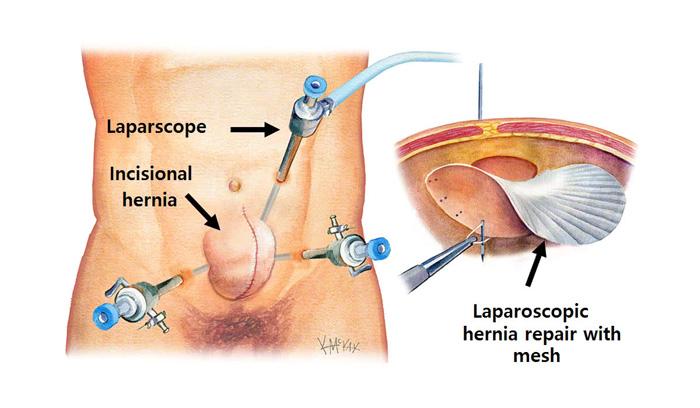
Hernias can occur in several areas:
- Inguinal hernia (groin)
- Femoral hernia (upper thigh)
- Umbilical hernia (near the navel)
- Incisional hernia (through a previous surgical scar)
Common symptoms
A visible or palpable lump
Pain or discomfort when coughing, lifting, or straining
A feeling of heaviness in the groin or abdomen
Swelling that becomes more obvious when standing
Symptoms that improve when lying down
Why Consider Laparoscopic Hernia Repair?
- Smaller incisions
- Less postoperative pain in many patients
- Faster recovery and return to work
- Lower risk of wound infection
- Better cosmetic appearance
- Ability to examine and repair both groins through the same small incisions
Not every hernia is suitable for a laparoscopic approach, and your surgeon will advise which technique is most appropriate.
How Does Laparoscopic Hernia Repair Work?
The operation is performed through small keyhole incisions using a camera and specialised instruments.
The abdomen is gently inflated with gas
To create working space
A camera and instruments are inserted
Through 3 small incision, 5mm each.
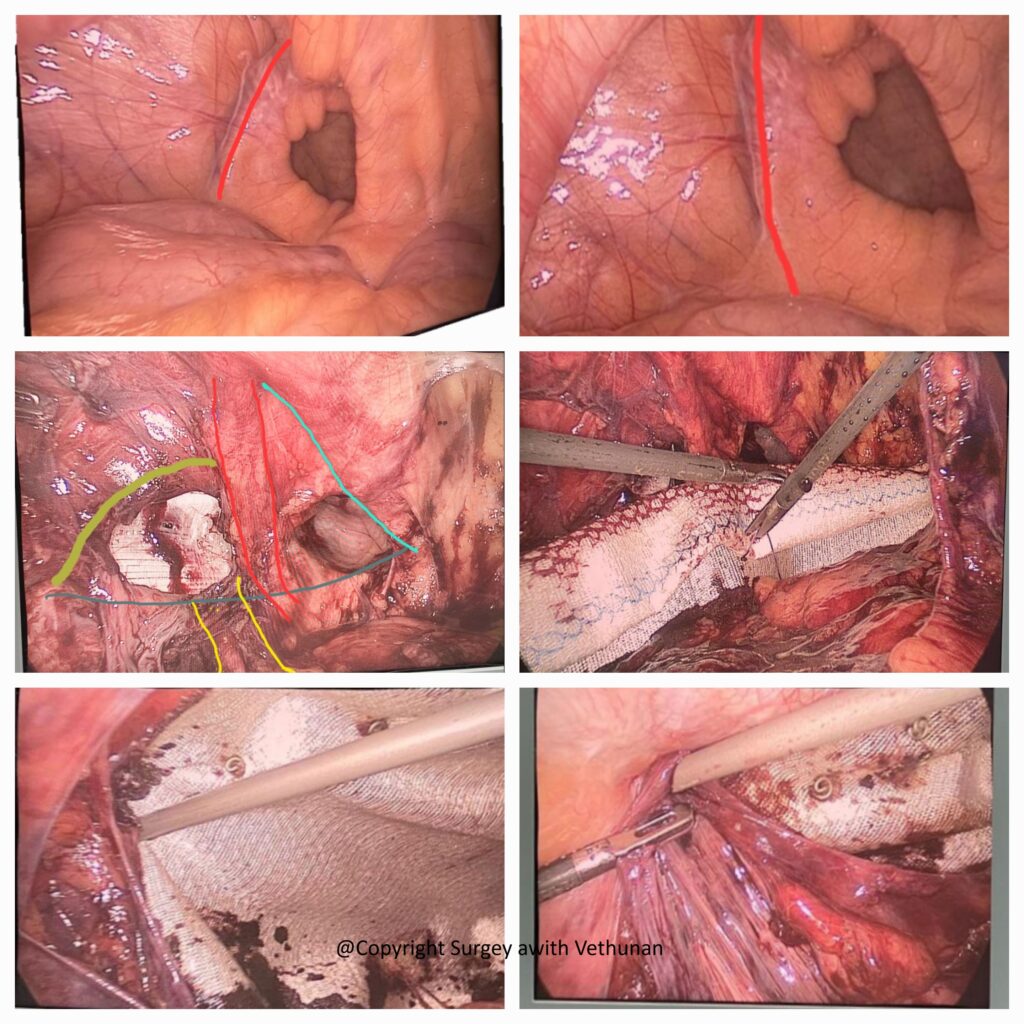
The hernia contents are returned into the abdomen
At times bowel or tissue resection will be needed
A synthetic mesh is placed
To reinforce the weak area
A mesh acts as a scaffold for new tissue to form, which will eventually fortify the weak spot on abdominal wall.
The small incisions are closed
With stitches or skin glue
Who May Benefit From Laparoscopic Repair?
Laparoscopic hernia repair may be especially beneficial for:
Any groin hernia
Recurrent hernias after previous open repair
Working adults with hernia who wish to return to activity sooner
Patients who prefer smaller scars
Selected umbilical and incisional hernias
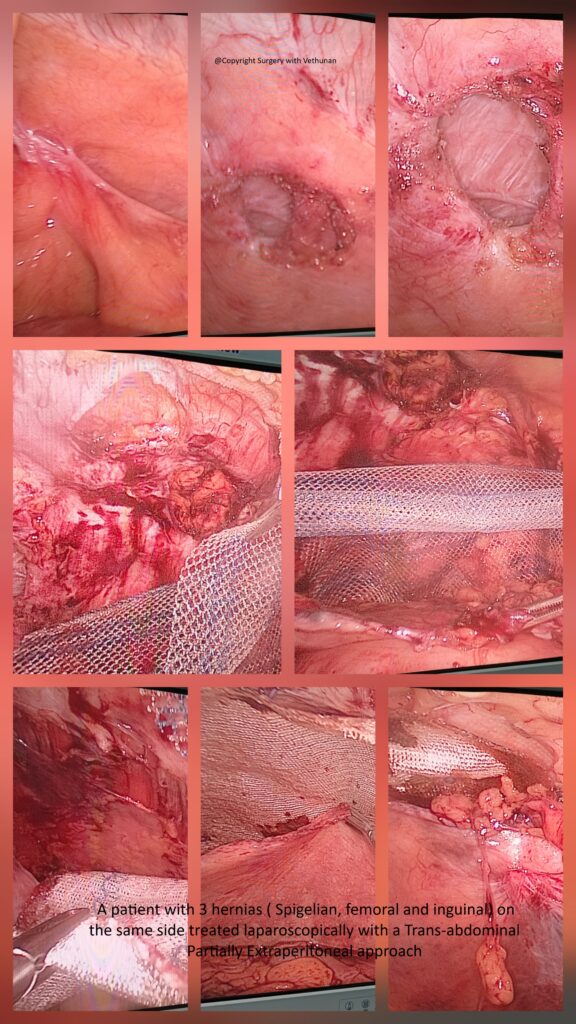
Patients with multiple abdominal hernias
Very large or complex hernias may require a different surgical approach.
Before Surgery: How to Prepare?
Before the operation, your surgeon will:
-
Examine the hernia
-
Review your medical history
-
Assess fitness for anaesthesia
-
Discuss the benefits and risks of surgery
You may be asked to
-
Fast for several hours before surgery
-
Stop certain blood-thinning medications if advised
-
Arrange transportation home
-
Avoid smoking, which can impair healing
.
Recovery After Laparoscopic Hernia Repair
First 24–48 hours (expected)
- Mild abdominal discomfort
- Shoulder-tip pain from the gas used during surgery
- Tiredness from anaesthesia
After a few days (usually)
- Walking comfortably
- Eating normally
- Performing light daily activities
Most patients can (within 1–2 weeks)
- Return to office-based work
- Drive when comfortable
- Resume moderate activities
Your surgeon will advise when to
- Lift heavy weights
- Return to gym training
- Resume strenuous physical work
Is the Surgery Painful?
Some discomfort is expected, but laparoscopic repair is generally associated with less postoperative pain than traditional open repair.
Pain is usually managed with oral medication, and many patients find that walking actually helps reduce stiffness and discomfort.
Frequently Asked Questions (FAQ)
Is laparoscopic hernia repair safe?
Will the mesh stay inside permanently?
Yes. The mesh is designed to remain in place and become incorporated into the surrounding tissues.
Can a hernia come back?
How long is the hospital stay?
When can I exercise again?
Take the Next Step Towards Hernia Repair
A hernia will not repair itself, and symptoms often worsen over time.
With laparoscopic hernia repair, many patients benefit from a minimally invasive operation that offers smaller scars, less discomfort, and a faster return to normal life.